top of page

All Posts

From Hidden Markups to Real Savings: The Transparency Revolution with Direct Provider Contracts
Every CFO knows the frustration: healthcare costs that seem to defy logic, with pricing that's about as transparent as mud. You're paying premiums that increase year after year, but when you ask your carrier to explain exactly where those dollars go, you get vague answers about "network discounts" and "administrative costs." Meanwhile, your employees are still getting hit with surprise bills, and your HR team is fielding angry calls about coverage denials. Here's the uncomfor
5 min read

No More Surprises: How Direct Provider Partnerships Make Cost Predictable for Employers & Employees
Every CFO has felt that sinking feeling when unexpected medical bills hit the company's bottom line. Every employee has opened a medical statement with dread, wondering what surprise charges await. The traditional insurance model thrives on this unpredictability: but it doesn't have to be your reality. Direct provider partnerships through modern TPAs like Quilt Benefits are revolutionizing how companies approach healthcare costs, replacing surprise billing with transparent, p
5 min read

Cutting Out the Middleman: How Direct Provider Contracts Save Employers Big
Your health plan carrier just sent over next year's renewal. Again. Another 8-12% increase with zero explanation of where those dollars actually go. Meanwhile, your employees are still getting surprise bills, your CFO is questioning every healthcare dollar, and your HR team is fielding complaints about network restrictions that make no sense for your workforce. Here's the thing: traditional carriers aren't just charging you for healthcare: they're charging you to restrict you
6 min read

How Self-Funded Plans Build True Company Value (While Fully Insured Plans Build Carrier Profits)
Part 6 of our Self-Funded Health Plan Advantages series Here's the uncomfortable truth about fully insured health plans: every year your company stays healthy, those savings end up padding your carrier's profit margins: not strengthening your bottom line. The healthier your workforce becomes, the more money flows away from your organization and into theirs. Self-funded plans flip this equation entirely. When you partner with a trusted TPA like Quilt Benefits, every wellness i
5 min read
Empowering Employers: Building Custom Provider Networks with a Modern TPA
The era of accepting whatever provider network your insurance carrier offers is officially over. Forward-thinking employers are discovering that modern Third-Party Administrators (TPAs) like Quilt give them unprecedented power to build custom provider networks that deliver exactly what their workforce needs: at precisely the cost they can predict and control. Gone are the days when CFOs had to choose between massive, unwieldy carrier networks with hidden markups or the admini
9 min read
![[HERO] The GLP-1 Revolution: Balancing Employee Health with Affordable Coverage Solutions](https://cdn.marblism.com/QHtLEhBvzJp.webp)
The GLP-1 Revolution: Balancing Employee Health with Affordable Coverage Solutions
GLP-1 medications have officially changed the game. What started as a breakthrough treatment for type 2 diabetes has evolved into one of the most significant shifts in employer health benefits we've seen in decades. Medications like Ozempic, Wegovy, and Mounjaro are delivering real results: and employees are paying attention. But here's the challenge every CFO and HR leader is wrestling with: these medications work, but they're expensive. Really expensive. The question isn't
5 min read
![[HERO] Level-Funded Health Plans Explained: Predictable Payments Without Surprises](https://cdn.marblism.com/MvBNqQN3Lue.webp)
Level-Funded Health Plans Explained: Predictable Payments Without Surprises
CFOs hate budget surprises. HR departments hate explaining premium spikes to leadership. And yet, year after year, traditional fully insured health plans deliver exactly that: double-digit increases with zero transparency and no way to predict what's coming next. There's a better way. Level-funded health plans are transforming how mid-sized companies approach employee benefits, delivering the financial predictability of fully insured plans with the cost control and transparen
6 min read
Why Self-Funded Health Plans Put Your Company First (Part 3): How to Build a Flexible, Cost-Effective Health Plan in 2026
You've seen the numbers. You understand the transparency advantage. Now it's time to build your self-funded health plan for 2026: one that puts your company's priorities first while delivering exceptional value to your employees. Unlike traditional fully-insured plans that lock you into rigid structures designed for insurance company profits, self-funded plans give CFOs and HR leaders unprecedented control over every aspect of their healthcare strategy. The question isn't whe
5 min read
Why Self-Funded Health Plans Put Your Company First (Part 4): Avoiding the Traps: Monitoring, Auditing, and Continual Optimization
Here's the uncomfortable truth: most CFOs treat their self-funded health plan like a fire-and-forget investment. Set it up, hand it off to HR, and hope the monthly reports look reasonable. That's exactly how you lose the 30-40% cost savings that drew you to self-funding in the first place. Smart companies know that self-funded plans require active management to deliver their full potential. Without proper monitoring, auditing, and optimization, you're essentially writing blan
5 min read

Why Self-Funded Health Plans Put Your Company First (Part 2): Busting the Biggest Self-Funding Myths
Last week, we talked about how fully insured plans funnel your dollars to insurance company profits while self-funded plans keep savings in your pocket. But here's what we hear from CFOs and HR leaders all the time: "That sounds great, but isn't self-funding risky/expensive/complicated?" Let's set the record straight. Most of what you've heard about self-funding is outdated, incomplete, or just plain wrong. Here are the biggest myths, and why they shouldn't stop you from expl
4 min read
Why Self-Funded Health Plans Put Your Company First (Part 1): The Hidden Price of Insurer Profits
When's the last time an insurance company sent you a thank-you note for your business? If you're a CFO or HR leader managing a fully insured medical plan, the uncomfortable truth is this: every dollar you pay in premiums directly fuels their profit margins: not your company's bottom line or your employees' healthcare outcomes. Here's what smart companies are discovering about the hidden costs baked into traditional insurance, and why 75% of employers are projected to make the
4 min read
Are One-Size-Fits-All Health Plans Dead? Why Smart Companies Are Going Custom
The writing is on the wall for traditional health insurance. CFOs are watching renewal increases hit 50% with zero visibility into claims drivers. HR leaders are losing top talent to competitors offering more flexible benefits. And employees? They're shouldering higher deductibles while getting less coverage. McKinsey's latest research delivers the knockout punch: 12 million employees will abandon fully insured plans by 2030 , with self-funded models covering 75% of the US wo
4 min read

The rise of "carrier-grade technology" without carrier -grade constraints
The employee benefits landscape is witnessing an unprecedented shift. Mid-market employers are discovering they no longer need to choose between cutting-edge technology and operational flexibility. The days of accepting clunky, restrictive carrier platforms in exchange for basic benefits administration are officially over. Enter the era of carrier-grade technology without carrier constraints, a revolution that's putting Fortune 500-level capabilities directly into the hands o
5 min read
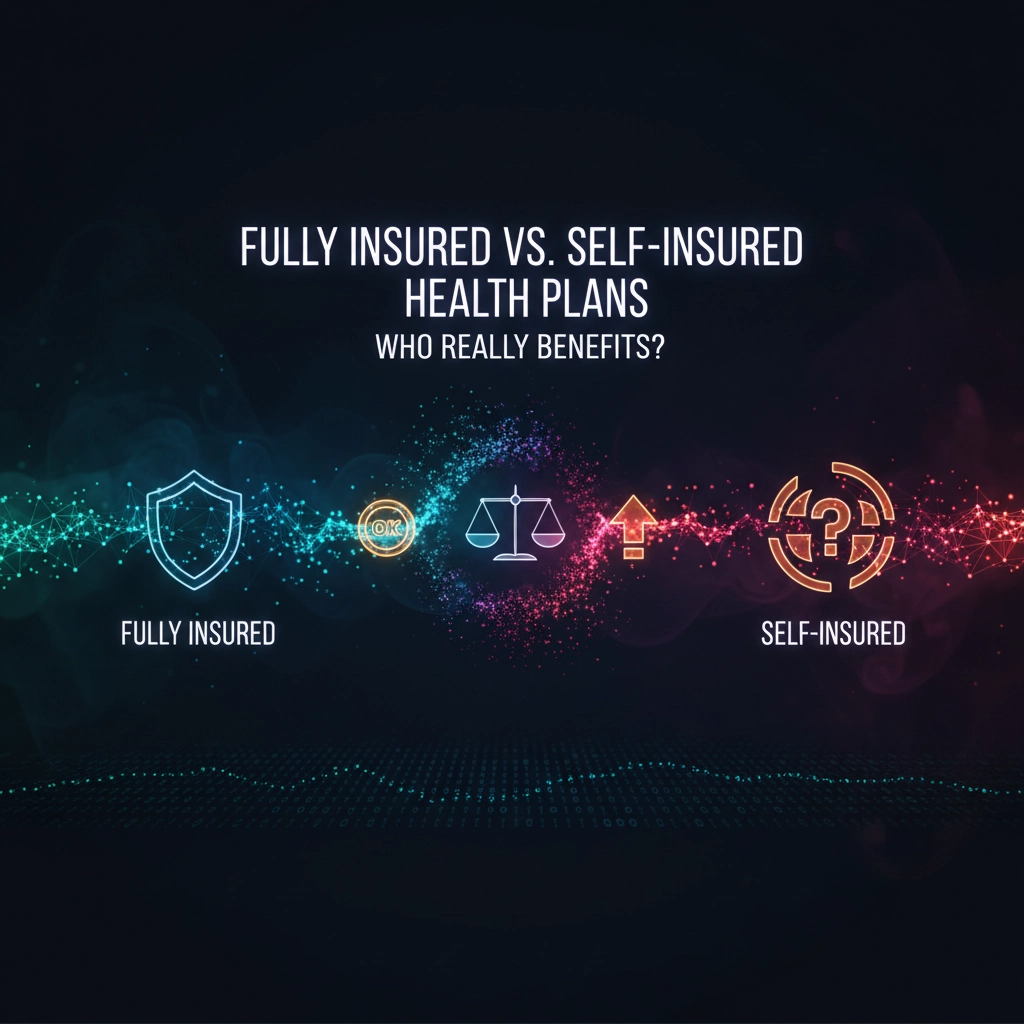
Stop Paying for Their Profits: Why Self-Funded Health Plans Put Your Company First
When CFOs evaluate health plan options, they're often presented with two primary paths: fully insured plans managed by traditional carriers, or self-insured plans administered by third-party administrators (TPAs). But here's the uncomfortable truth most benefits consultants won't tell you: these two approaches serve fundamentally different masters. Fully insured carriers design plans around their own profitability. Self-insured plans administered by client-focused TPAs like Q
5 min read
Quilt Benefits: Fortune 100 Tech, Systems, and Flexibility: For a Fraction of the Cost
CFOs spend sleepless nights worried about rising healthcare costs. HR leaders feel trapped between employee demands for better benefits and budget constraints. Meanwhile, employees and their families deserve Fortune 100-quality healthcare without the Fortune 100 price tag. What if you could access the same enterprise-grade technology, sophisticated systems, and proven processes that Fortune 100 companies use: but at a fraction of the cost, with complete control over your bene
5 min read
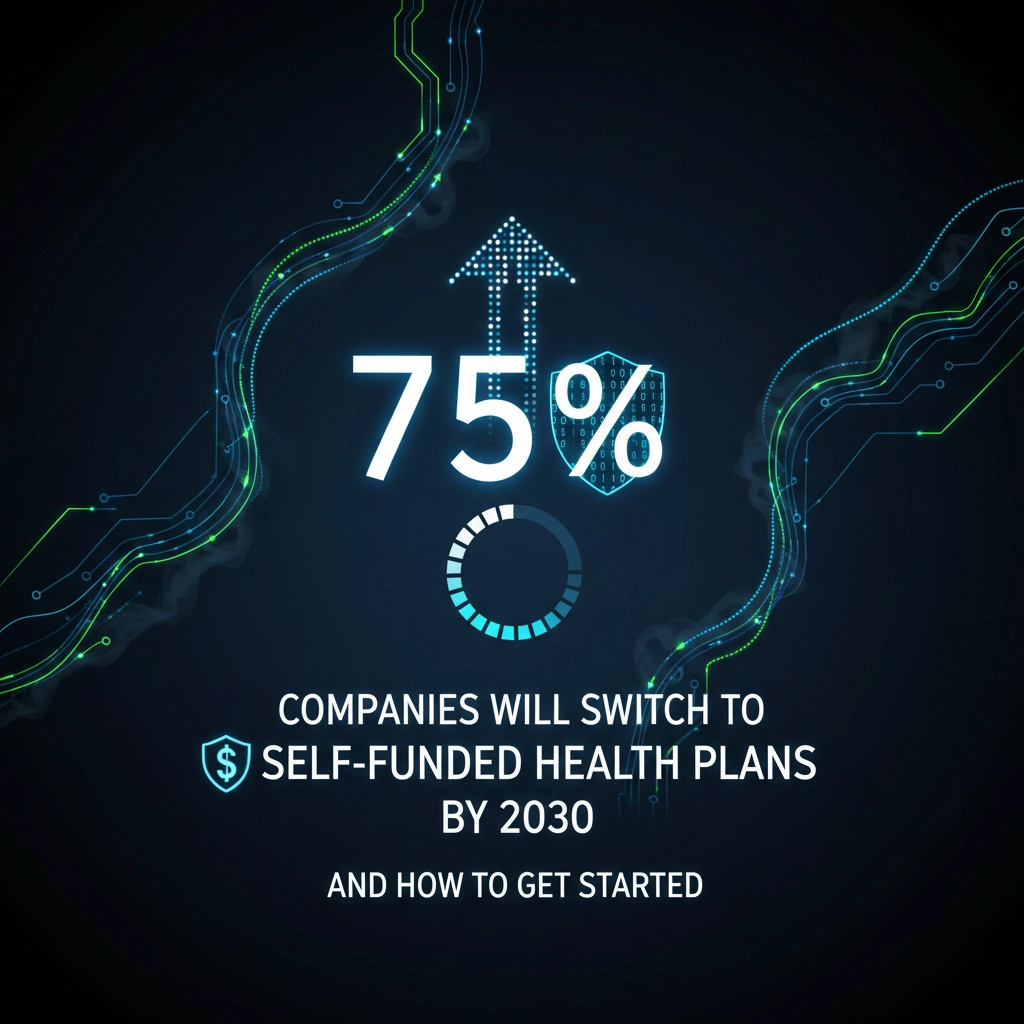
Why 75% of Companies Will Switch to Self-Funded Health Plans by 2030 (And How to Get Started)
The healthcare benefits landscape is experiencing an unprecedented transformation. While traditional fully-insured plans continue to squeeze CFO budgets with 6-7% annual premium increases, forward-thinking companies are discovering a powerful alternative that puts them in full control of their healthcare spending. The data tells a compelling story: 63% of covered workers were already enrolled in self-funded health plans by 2024, according to the Kaiser Family Foundation. But
5 min read

Million-Dollar Claims Are Rising: The CFO's Guide to Managing High-Cost Claimants
As a CFO, you've probably noticed something unsettling in your benefits spend reports lately. Those million-dollar medical claims that used to be once-in-a-blue-moon events? They're becoming routine line items in your quarterly reviews. And if you haven't experienced one yet, the statistics suggest you're living on borrowed time. The healthcare landscape has fundamentally shifted, and the old playbook for managing benefits costs is no longer sufficient. Million-dollar claims
5 min read
How to Cut Employee Benefits Costs by 30% Without Sacrificing Quality
CFOs across America are facing an impossible equation: employee benefits costs that increase 6-8% annually while budgets remain flat. Yet cutting benefits risks losing top talent in today's competitive market. The solution isn't choosing between cost control and quality, it's reimagining how you structure, deliver, and optimize your entire benefits program. The 30% cost reduction target isn't just aspirational. Companies partnering with strategic benefits advisors are achievi
6 min read
bottom of page